
Table of Contents
Complete Guide: Procurement Integration with SAP and Oracle in Latin American Companies
Equipo Editorial EGIXIA
ERP Integration Experts
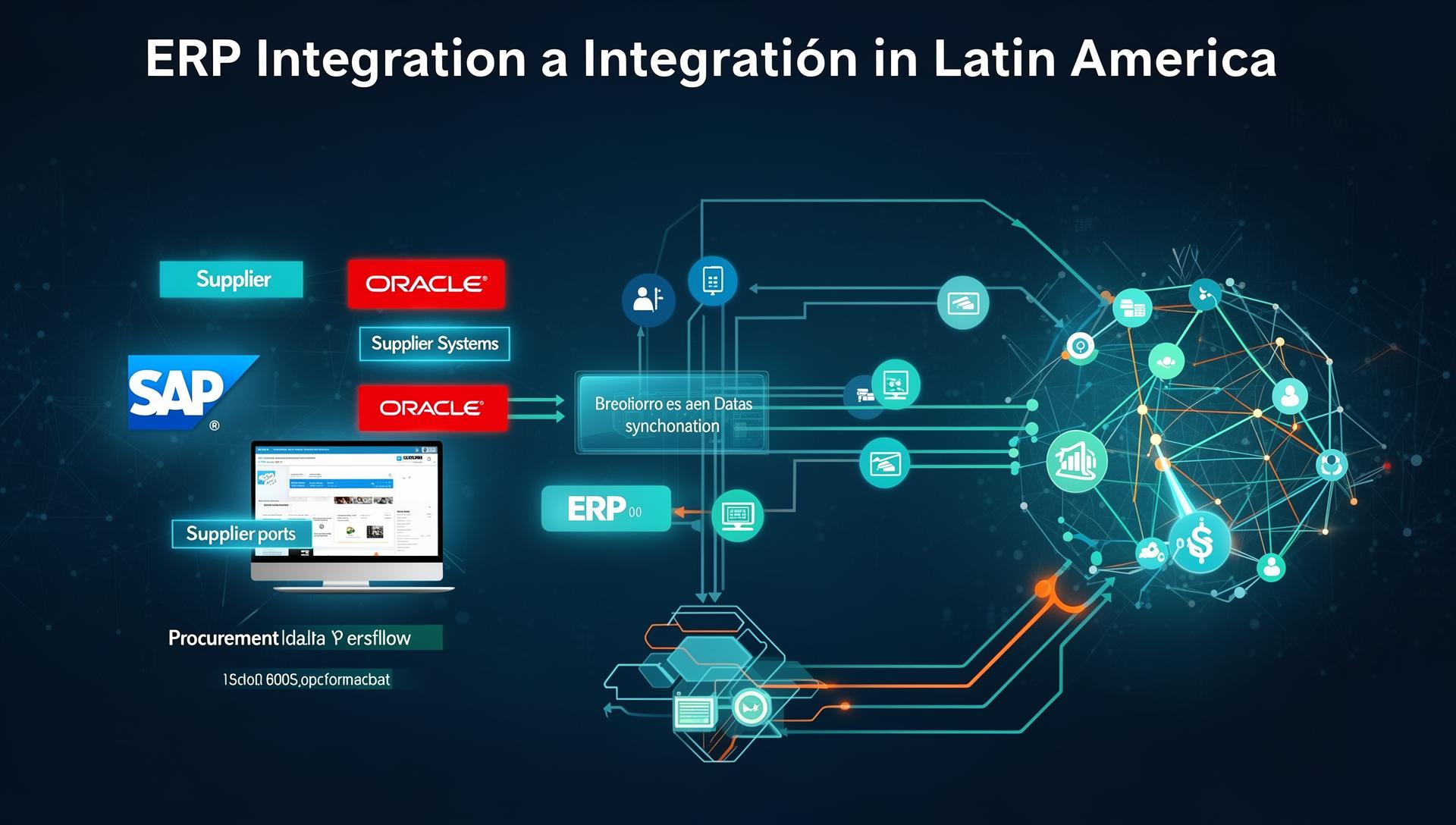
Why is it critical to integrate my supplier portal with SAP or Oracle?
Integration eliminates double data entry, provides 360° visibility of the procure-to-pay cycle, and automates invoice reconciliation. Without integration, companies lose up to 15% in cost overruns due to lack of visibility and inefficient processes.
Key Takeaways
- Non-integration between supplier portal and ERP generates cost overruns of up to 15% according to KPMG
- Native connectivity surpasses APIs in stability, speed, and data depth
- LATAM regulatory complexity (DIAN, SRI, SUNAT) requires specialized solutions
- 5 critical steps: data mapping, governance, architecture, testing, and continuous monitoring
- Choosing a technology partner that understands both ERP and regional context is key
Introduction
For any large corporation in Latin America, SAP or Oracle is not just software—it's the digital heart of the operation. However, many of these companies face a dangerous disconnect: while their ERP manages finances and accounting, procurement processes and supplier management live in a separate silo, often in spreadsheets, emails, or a supplier portal that doesn't communicate effectively with the central system.
This gap, according to a KPMG study, can generate cost overruns of up to 15% due to lack of visibility and process inefficiency [1].
Integrating the procurement ecosystem with the ERP is not a technical luxury—it's a strategic necessity. It enables complete visibility of the procure-to-pay cycle, automates critical processes like invoice reconciliation, and provides the data needed for intelligent decision-making. However, achieving successful integration in the complex Latin American business environment is a major challenge.
This comprehensive guide explores the specific challenges of procurement integration with SAP and Oracle in Latin America and presents the best strategies to overcome them.
The Hidden Cost of Non-Integration
When the supplier portal and ERP are not synchronized, companies pay a high price:
- Manual Errors: Double data entry between systems is a constant source of errors that can lead to duplicate or incorrect payments.
- Lack of Visibility: Without a 360° view, it's impossible to have real control over spending, supplier performance, or potential risks.
- Slow Processes: Manual invoice reconciliation, email approvals, and lack of real-time information slow down the entire purchasing cycle.
- Strained Supplier Relationships: Suppliers become frustrated by the lack of visibility into their invoice and payment status, deteriorating the business relationship.
Integration Challenges in the Latin American Context
Integrating systems in Latin America presents additional obstacles:
- Regulatory Complexity: The need to validate electronic invoices with tax authorities (DIAN, SRI, SUNAT) in real-time adds a layer of complexity that many global solutions don't handle natively.
- ERP Customization: Many SAP and Oracle implementations in the region have a high degree of customization, making it difficult to use standard connectors.
- Master Data Quality: The lack of robust data governance often results in inconsistent or duplicate supplier data in the ERP, complicating synchronization.
Native Connectivity vs. API Integration: What's the Difference?
Not all integrations are equal. It's crucial to understand the difference between the two main approaches:
| Characteristic | API Integration | Native Connectivity |
|---|---|---|
| Mechanism | Connectors that translate data between systems | Direct bidirectional communication with the ERP database |
| Stability | API-dependent; can "break" with updates | High; designed to work with the ERP's business logic |
| Speed | Slower; data moves in batches or on-demand | Real-time; changes reflect instantaneously |
| Depth | Limited to data the API exposes | Complete; access to all ERP business logic and data |
| Maintenance | Requires constant monitoring and updates | Less maintenance once configured |
While API integration may be faster to implement initially, native connectivity offers a much more robust, stable, and long-term solution, especially for business-critical processes.
Platforms like EGIXIA have made native connectivity with SAP and Oracle one of their main differentiators, building deep integration that respects ERP business rules and ensures seamless information flow.
5 Steps to Successful Integration
Step 1: Process and Master Data Mapping
Before writing a single line of code, it's essential to map the complete data flow, from supplier creation to invoice payment, and identify which system is the "source of truth" for each data point.
Step 2: Define the Data Governance Model
Establishing clear rules about who can create, modify, and archive supplier data is essential to avoid inconsistencies.
Step 3: Choose the Right Integration Architecture
Decide between native connectivity, APIs, or a hybrid approach, based on process complexity and available resources.
Step 4: Rigorous Implementation and Testing
Conduct exhaustive testing of all possible scenarios (supplier creation, invoice submission, payment approval, etc.) before going live.
Step 5: Continuous Monitoring and Optimization
Once live, it's crucial to monitor integration performance and optimize it as business processes evolve.
The Role of Specialized Platforms
Attempting to build and maintain robust integration from scratch is a titanic and costly task. That's why more and more companies in Latin America are opting for specialized procurement platforms that have already solved this challenge.
When evaluating these platforms, it's vital to ask the right questions:
- Is the integration native or via API?
- Can the platform handle our ERP customizations?
- How is master data synchronization managed?
- Is the solution certified by SAP or Oracle?
Conclusion: Toward a Unified Procurement Ecosystem
Integrating your supplier portal with your ERP is not an IT project—it's a business initiative that can unlock immense value. By eliminating information silos and creating a unified procurement ecosystem, companies can achieve unprecedented operational efficiency, mitigate risks more effectively, and ultimately make smarter, faster decisions.
The key to success lies in choosing a technology partner that not only understands software but also deeply understands both your ERP's business logic and the complexities of the Latin American business environment. Only then can you build a solid digital bridge that turns your procurement process into a true competitive advantage.
References
[1] KPMG. (2024). The Power of Integration: Unlocking Value in Procurement. Retrieved from https://home.kpmg/xx/en/home/insights/2024/01/the-power-of-integration.html
Frequently Asked Questions
Native connectivity offers direct bidirectional communication with the ERP database, with greater stability, real-time speed, and complete access to business logic. API integration is faster to implement but less stable, slower, and limited to data exposed by the API.
Topics